
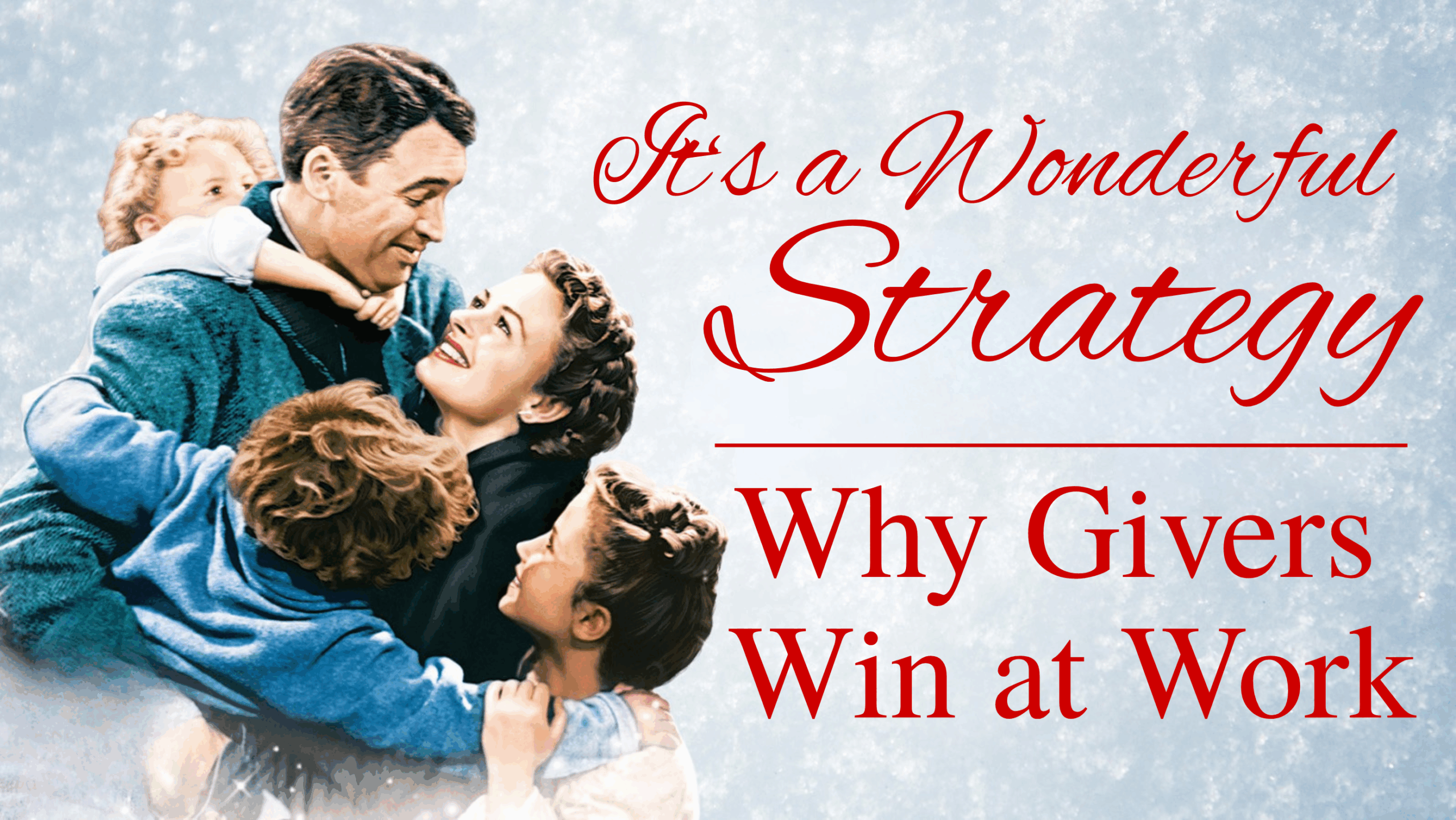
For me, no movie embodies the spirit of the season quite like It’s a Wonderful Life. It’s truly one of my favorite holiday movies. I grew up watching it with my family, and even now I make a point to try and watch it each year.
On the surface, it is a simple Christmas classic. But as I got older, I started to see more layers in it. The story feels even more meaningful when you step back and think about work, leadership, and the way we show up for the people around us.
As I’ve re-watched it over the years, I realized the film is also a powerful, insightful case study for one of my favorite business books: Adam Grant’s Give and Take.
This idea has been on my mind as I work with leaders and hiring managers. Many are in a busy season. Many feel squeezed by deadlines, growth goals, family life, or career transitions. The holidays often bring that pressure into sharper focus. So this felt like the right time to explore how the “George Bailey strategy” can actually shape your career, your team, and your leadership.
Givers, Takers, Matchers: From Bedford Falls to the Boardroom
Grant’s book outlines three types of people in the workplace: Givers, Takers, and Matchers. Every professional fits into one of these buckets.
- A giver tries to add value wherever possible. They seek to contribute to others without expecting immediate repayment.
- A taker looks for ways to gain an advantage. They believe success means being better than others.
- A matcher keeps score. A matcher helps when help seems fair and track favors like an internal ledger.
Grant’s research shows something fascinating. Givers often land at the very bottom of the success ladder. They risk burnout and exploitation. But here is the counterintuitive part: Givers also occupy the very top of the success ladder. Grant makes the case that the most successful long-term professionals are strategic, healthy Givers.
This is where It’s a Wonderful Life becomes a leadership case study.
Mr. Potter: The Classic Taker
Mr. Potter, the richest and meanest man in town, is the ultimate Taker. His entire life is defined by a scarcity mindset. He hoards power, financial resources, and credit. He tries to steal opportunities and dominate the marketplace. In a modern office, Takers are leaders who drain trust. They damage culture. They create fear-driven, self-protective workplaces. They see every transaction as a zero-sum game: if you win, they lose. This approach may yield quick profits, but it guarantees long-term instability.
George Bailey: The Sustainable Giver
George Bailey embodies the sustainable Giver. He constantly puts others first. He sacrifices his worldly ambitions to ensure the well-being of his neighbors. His generosity is not just emotional; it is an investment in people’s growth. He takes time for others. He offers housing opportunities. He advocates for his community. He does this without expecting anything immediate in return.
This is exactly what Grant’s research champions. George does not just give emotionally. He invests in others’ long-term growth. This long-term mindset is what Giver success looks like. People rally around him because he has poured everything he has into them.
The Town: A Culture Shaped by Generosity
The movie’s climax is the most beautiful example of social capital in action. George faces ruin. He feels completely alone. But his brother, his friends, his neighbors—the entire town—rally around him. They pool their money. They show up to save him.
They are responding to decades of George’s generosity. This validates Grant’s finding completely: Givers build powerful networks that advocate for, support, and elevate them when they need help the most. George’s steady acts of kindness created a cultural legacy that saved his life and his business.
What the Data Actually Says: How Givers Build Better Careers and Better Teams
You might think George Bailey is too sentimental for the boardroom. The data says otherwise. In our increasingly competitive world, cultivating a Giver mindset is one of the most beneficial things you can do personally or professionally.
Teams with more givers tend to show higher trust and better collaboration. Productivity improves because people help each other instead of protecting their own lanes. Givers often receive more support from colleagues. They also gain access to larger networks. One study he cites shows that givers are more likely to become top performers because they raise the performance of the people around them.
This does not happen overnight. George Bailey shows that influence builds through simple actions repeated over time. You help one person. You make one introduction. You share one skill. You celebrate one colleague. You do this again and again. It feels small in the moment. Later it becomes clear that you have built a strong foundation.
Encouraging Reminders for the George Baileys in the Workplace
George Bailey spent most of his life believing he had fallen short. He did not see the impact of his actions until the very end. The same thing happens in real life. You may feel stuck. You may feel like your efforts go unnoticed.
Here is the encouragement…
- Your generosity shapes culture. People always remember how you make them feel. That feeling spreads throughout the office faster than any memo.
- Your investment in people builds legacy. Often, the most meaningful work you do is not listed on your job description. It is the mentorship you offer or the opportunities you give away.
- Your giving is noticed, even when you don’t see the impact right away. Just like George Bailey, your everyday actions add up. That social capital is there when you need it most.
- Your kindness is contagious. In a season built on generosity, your leadership can become the turning point for someone else’s career.
As you reflect on the year and prepare for the next one, consider the It’s a Wonderful Life strategy. You may not see the return right away, but the long-term payoff is real. And sometimes, like George, you look up and discover that your simple acts of generosity have created something much bigger than you expected.
By Kent Wilson