
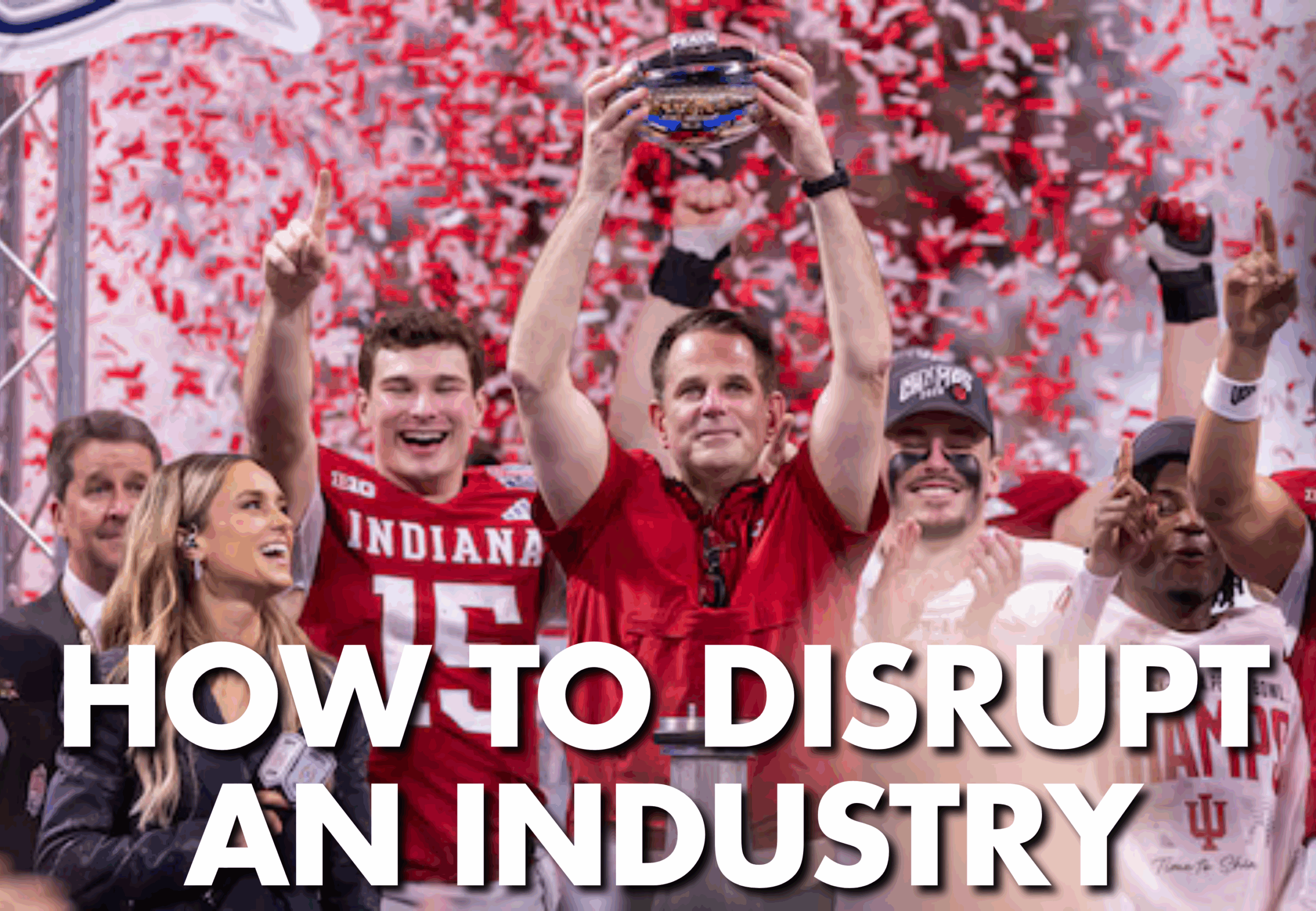
I still can’t quite believe what I watched at the Peach Bowl. Standing there with my brother, wearing IU red, cheering as the Hoosiers punched their ticket to the national championship felt surreal. I grew up going to IU games when they practically gave tickets away. The stadium would be half full, and “optimism” was usually just hoping we didn’t lose by thirty.
If you know anything about Indiana football history, you know it hasn’t been pretty. Before Curt Cignetti arrived, Indiana held a record nobody wants: the most all-time losses in Division I history. Between 1995 and 2024, the program managed only three winning seasons. We were the team other schools scheduled for their “Homecoming” because we were a safe win.
Now we’re the No. 1 team in the country. We have a Heisman-winning quarterback. And in a few days, Indiana will play for a national championship. This turnaround is not a fluke or a “lightning in a bottle” season. It is the result of one of the smartest executive hires in modern college football.
As a fan, I’m elated that IU hired Cignetti and empowered him to build a successful program. As a recruiter, I am fascinated by how they did it. After learning more about the hiring process IU used to bring in Cignetti, I believe there is a clear blueprint here that any business leader can use to flip a failing department.
Breaking the Prototype: What to Really Look for in a Leader
The first thing that stands out about the Cignetti hire is that it wasn’t the “flashy” choice. Most big-time programs hunt for the 35-year-old “hot coordinator” from a powerhouse school. They look for the rising star with a high-gloss social media presence.
Indiana did the opposite. They hired for performance over archetype. Curt Cignetti had established himself as a successful head coach with a 119-35 career record at smaller schools like IUP, Elon, and James Madison. But some wondered if that success would translate to a Power 5 conference program.
These are questions and issues I see in the business world as well. Leaders get distracted by the candidate who looks the part. They confuse polish with performance. They hire potential when what they really need is proof.
The best leaders I work with do not chase shiny résumés. They look for people who have already solved the problem they are facing. They want someone who knows their strengths, understands their blind spots, and brings real confidence to the table.
The Strategic Search: IU’s Approach for Hiring a Change Agent
Another fascinating aspect of the hire was the process IU implemented for hiring Cignetti. Athletic director Scott Dolson did not run a popularity contest. He ran a disciplined search and used a pro forma approach that forced clarity around what actually mattered.
Here is what stood out.
1. A Data-Driven, Pro-Forma Approach
Before IU ever looked at résumés, Scott Dolson studied the landscape. He analyzed programs like North Carolina, Duke, Kentucky, and Kansas — schools with strong basketball identities that had still found ways to win in football. He looked at what worked, what failed, and what kind of coach succeeded in those environments. By analyzing these “peer” organizations, he was able to create a precise job description for the leader IU actually needed.
This is a valuable insight for businesses. Before you rush to hire, slow down and study your own situation. Take time to understand what your organization actually needs, not just what you think you need. Look at companies with similar constraints and learn from them.
2. The Winner Requirement
Dolson wanted someone who had been a head coach and had won. Not once. Not by accident. He wanted someone who had done it over and over. Cignetti checked that box. He had taken multiple programs from mediocrity to dominance. He knew how to build culture, recruit talent, and sustain performance. That track record reduced risk.
In business, this matters more than people admit. If you need a turnaround, hire someone who has already done one. Past behavior remains one of the best predictors of future results.
3. Portal and Talent Acquisition Savvy
In the modern era, you can’t wait five years for a rebuild. IU needed a leader who understood how to overhaul a roster overnight using the transfer portal.
Cignetti didn’t just understand the portal; he mastered it. He brought 13 players with him from James Madison—players who already knew his system and believed in his culture. He treated talent acquisition like a strategic merger, bringing over the “top performers” to ensure the new branch succeeded immediately.
Every business faces the same challenge. The leaders that successfully turn around companies know how to build teams and bring in new talent in a way that creates a stronger culture.
4. A Proven Blueprint
Dolson noted that many candidates have a “vision,” but Cignetti had a “blueprint” which he shared during his initial interview. He had already executed the same turnaround at multiple stops. That made him dangerous in the best way.
This is what great hiring looks like. You do not hire hope. You hire someone who knows how to lead through change and has a desire to help your company do the same.
Empowering the Disruptor: Hiring and Letting Them Lead
Finding the right leader is only half the battle. The other half is actually letting them lead. This is where IU President Pamela Whitten deserves a ton of credit. She didn’t just hire Cignetti; she gave him the “budget” to execute.
IU stepped up with record-breaking investments in NIL and coaching staff salary pools. They recently inked Cignetti to a massive eight-year extension worth nearly $93 million.
That sent a message and has earned the attention and respect of alumni and other stakeholders like Mark Cuban.
This offers another important reminder for businesses. If you hire a leader to fix a broken department, you must give them the autonomy and resources to actually change the organization’s DNA. You cannot hire a disruptor and then ask them to protect the old ways. You cannot demand transformation while defending the status quo.
If you want a different result, you have to support the different approach. IU chose trust. And that trust paid off.
The Blueprint for Your Next Breakthrough
Watching IU play for a National Championship is something I never thought I’d see in my lifetime. But the more I look at how Curt Cignetti was hired, the more it makes sense. Turnarounds are possible in any industry. They just require the courage to hire the right candidate, even if they don’t fit the “typical” mold.
I’ve learned a lot from watching this process unfold. As an executive recruiter, it’s a reminder that the best candidate isn’t always the one with the flashiest resume—it’s the one with the most reliable blueprint. This season, IU proved that when you make the right hire and give them the resources to lead, you can transform an entire organization and even make history.
That is not magic. That is leadership.
By Kent Wilson